What Smart AML Systems checks
We look at where funds originated and how they moved before reaching us, and screen for exposure to sanctioned or high-risk sources.
[ SECURITY - AML & KYC ]
Every transaction is screened by Smart AML Systems. What KYC means in crypto payments, what PayKilla actually requires, and what happens when a flag fires.
KYC verifies individuals, KYB verifies businesses, AML involves ongoing screening process both feed into.
PayKilla requires KYB from the merchant - not KYC from your customers.
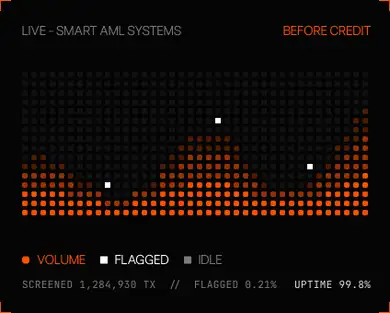
Every transaction is screened by Smart AML Systems before funds are credited.
A fully “no-KYC” gateway with fiat settlement doesn’t exist in a regulated environment- see why below.
KYC confirms who an individual is; KYB confirms who a business is; AML covers the broader compliance processes, including ongoing transaction monitoring. PayKilla applies KYB to merchants, not KYC to their customers.
| Term | What it checks | Who it applies to | |
|---|---|---|---|
| KYC | Personal identity (ID, address) | Individual end users | On request |
| KYB | Business registration, beneficial ownership, business model | Merchants / legal entities | At onboarding |
| AML | Source of funds, transaction patterns, sanctions screening | All parties - ongoing | Every transaction |
During onboarding, we verify your business and request your company’s incorporation documents before you start accepting payments.
Every payment is screened by Smart AML Systems before funds are credited, not after.
We look at where funds originated and how they moved before reaching us, and screen for exposure to sanctioned or high-risk sources.
The merchant is notified with a reason code, and the funds are held.
The transaction may take additional time to process; following manual review by our compliance team, it will be handled according to our internal AML policy.
We use cookies and similar technologies to ensure the Website functions properly, analyse traffic, and personalise your experience. Some cookies are essential; others help us improve our services.
Cookie PolicyStrictly Necessary
Required for the Website to function. These cannot be disabled.
Always active
Performance & Analytics
Help us understand how visitors use the Website (Google Analytics, RudderStack).
Targeting
Used to segment audiences and deliver relevant content.
Functionality
Enable personalised features and remember your preferences.